

How Digital Ocean got millions of monthly readers by understanding developers. In this analysis, we map Digital Ocean's growth to understand where its organic traffic comes from, how it grew so fast, and the strategic marketing decisions made along the way.
TL;DR
- Digital Ocean's traffic grew from 1.59M to 4.67M visitors per month in one year (192.7% increase)
- The community section alone brings in 89% of total traffic
- DO quietly acquired three dev-focused publications: Alligator.io, Scotch.io, and JournalDev (~968K combined traffic)
- CSS-Tricks acquisition gave them 1M+ monthly visitors, 91,000 pages of backlinks, and a pipeline of technical writers
- Branded search dropped from 22% to 8.6% as non-branded traffic diversified their acquisition channels
- Pages decreased 53% while traffic rose 88% through smart content consolidation
Digital Ocean (DO) is one of the world's leading cloud infrastructure providers. Founded in 2011, DO has been growing ever since.
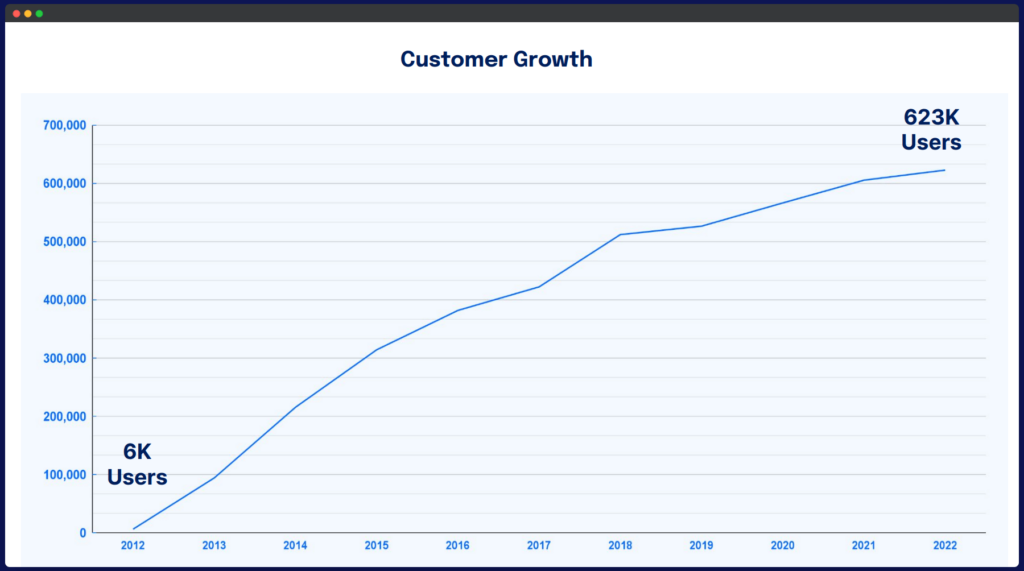
Since Growtika entered the developer marketing world, I have been fascinated by how companies like DO mark themselves as industry leaders and attract a large developer audience by providing great docs and technical content.
Seeing these remarkable stats, my interest in finding a Digital Ocean growth hack shifted from fun research to my primary mission. If I could learn what DO is doing and how they do it, I could use these techniques for Growtika's clients. So besides writing it to enrich our audience's knowledge, I have some incentives!
Overview: Mapping Digital Ocean Traffic
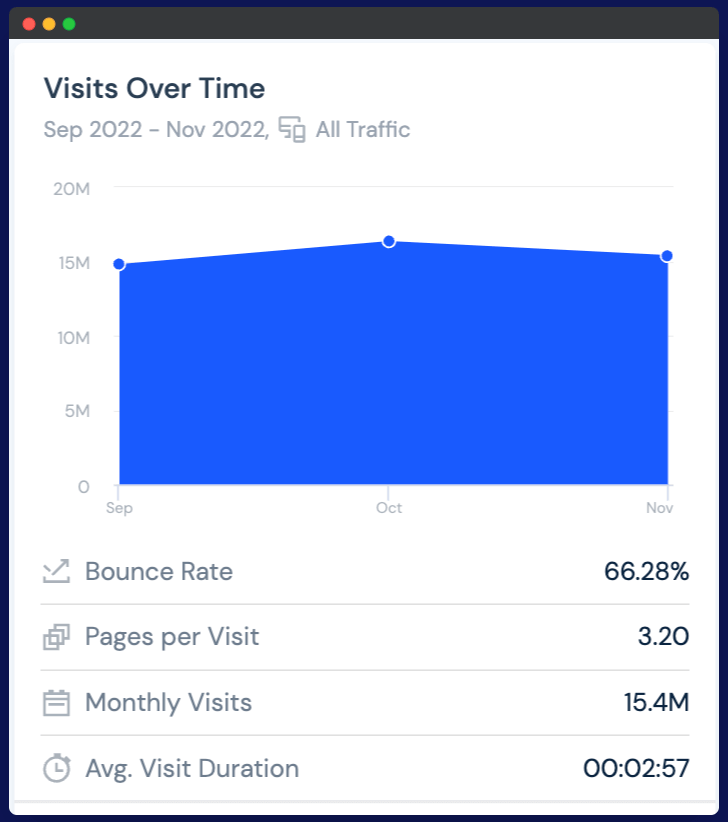
According to Similarweb, Digital Ocean has 15.4 million visitors per month.
Using Ahrefs, we found that DO's organic traffic stands at 4.49M visitors per month (as of 30 November 2022). From 1 Nov. 2021 to 1 Nov. 2022, Digital Ocean's traffic increased from 1.59M to 4.67M visitors per month.
When Things Changed
Mapping Digital Ocean's organic traffic was my first step toward seeing the bigger picture and figuring out when and why things changed.
The community section alone brings in 89% of its total traffic! If the community section is their growth engine, what is fueling this traffic machine?
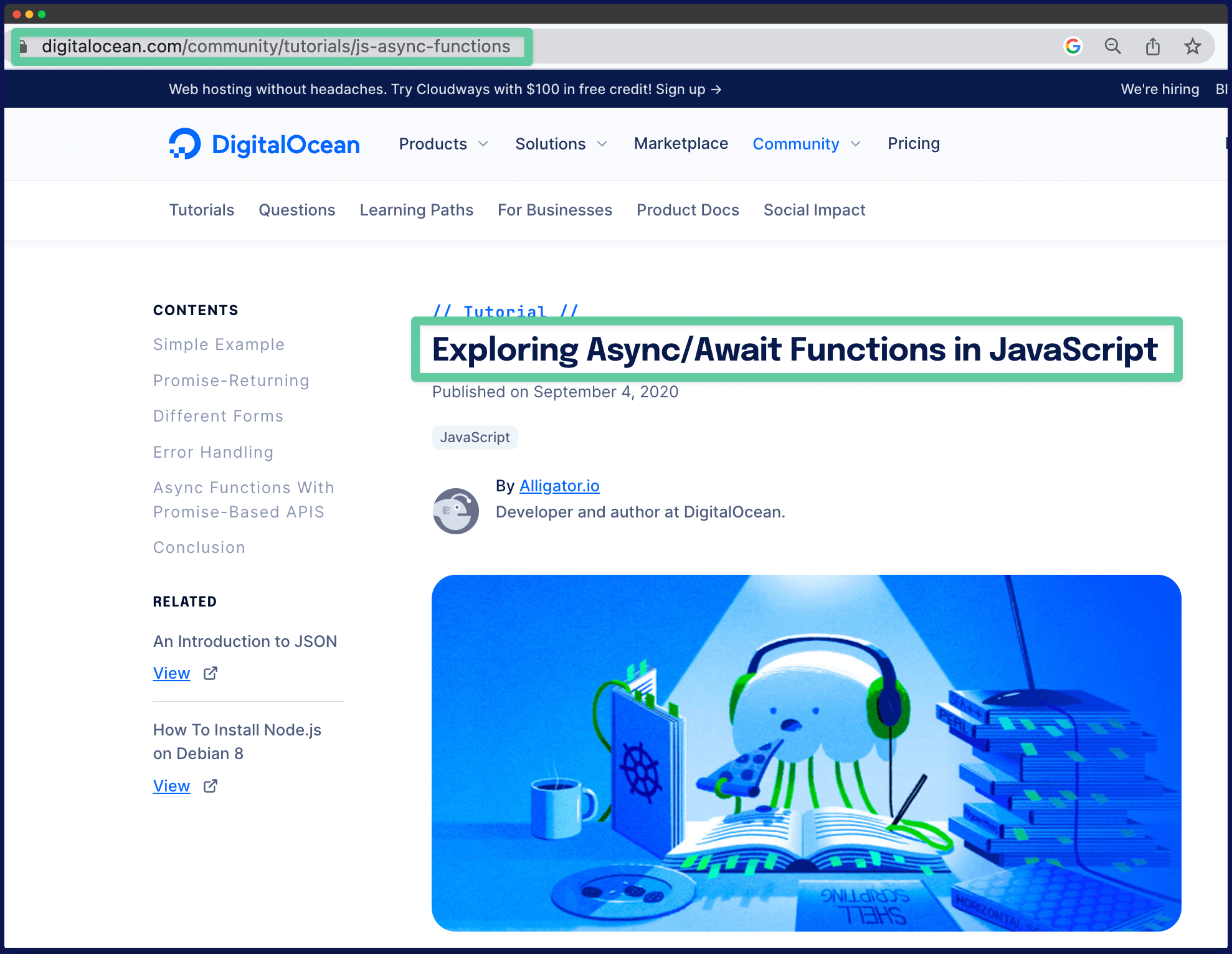
In the last two years, Digital Ocean acquired three mid-size dev-focused publications: Alligator.io, Scotch.io, and JournalDev.
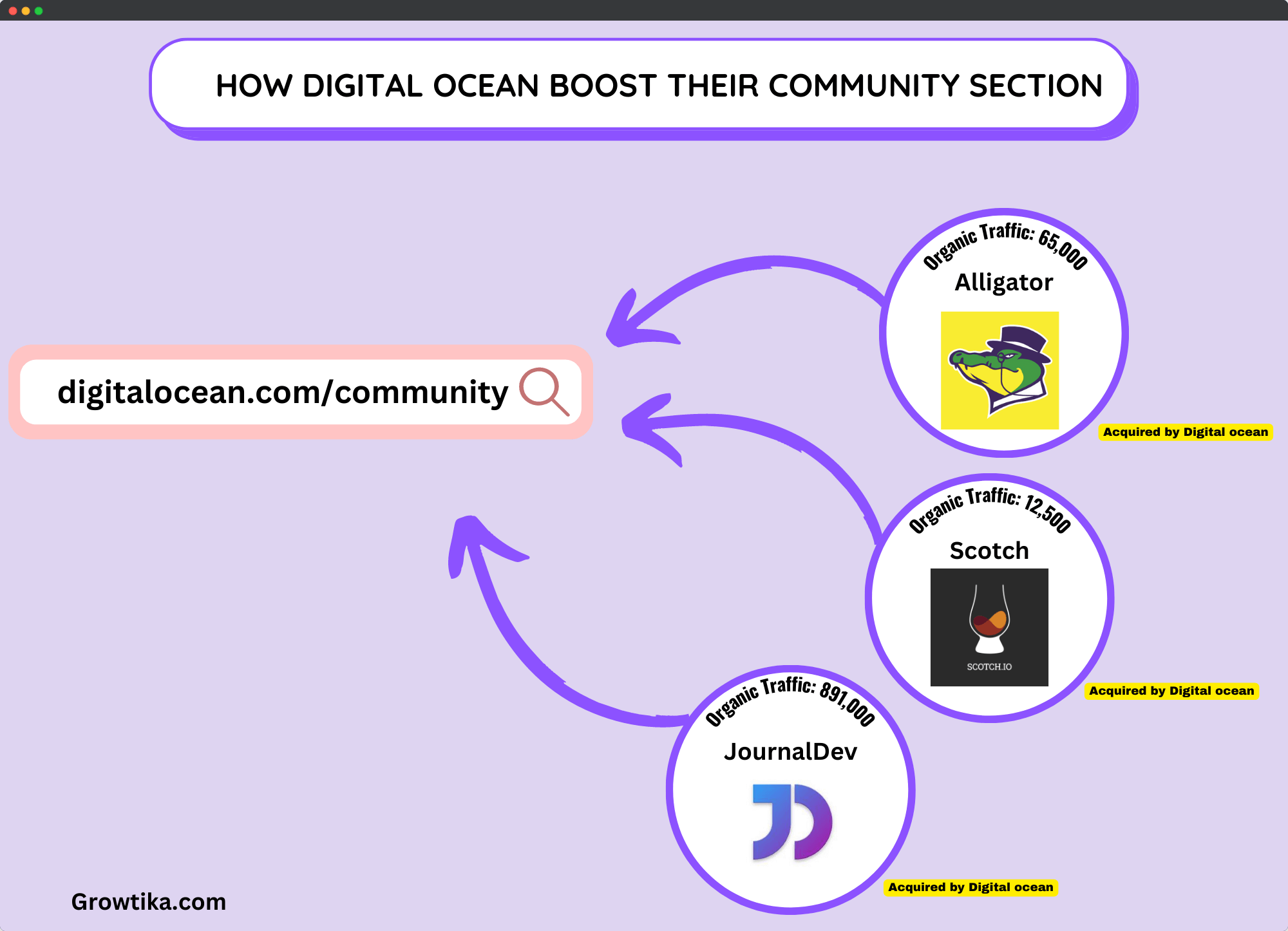
This was a strategic move. Since these websites weren't among the most prominent publications in their niche, the acquisition didn't create much buzz. It wasn't covered in many tech news sites, and I couldn't find a mention of it on CrunchBase.
Migration Timeline
Before we dive into the impact of these acquisitions, it's important to mention that domain migration is a process that can take several months. So, when Digital Ocean acquires a domain, the articles won't instantly rank as high on their new domain as before.
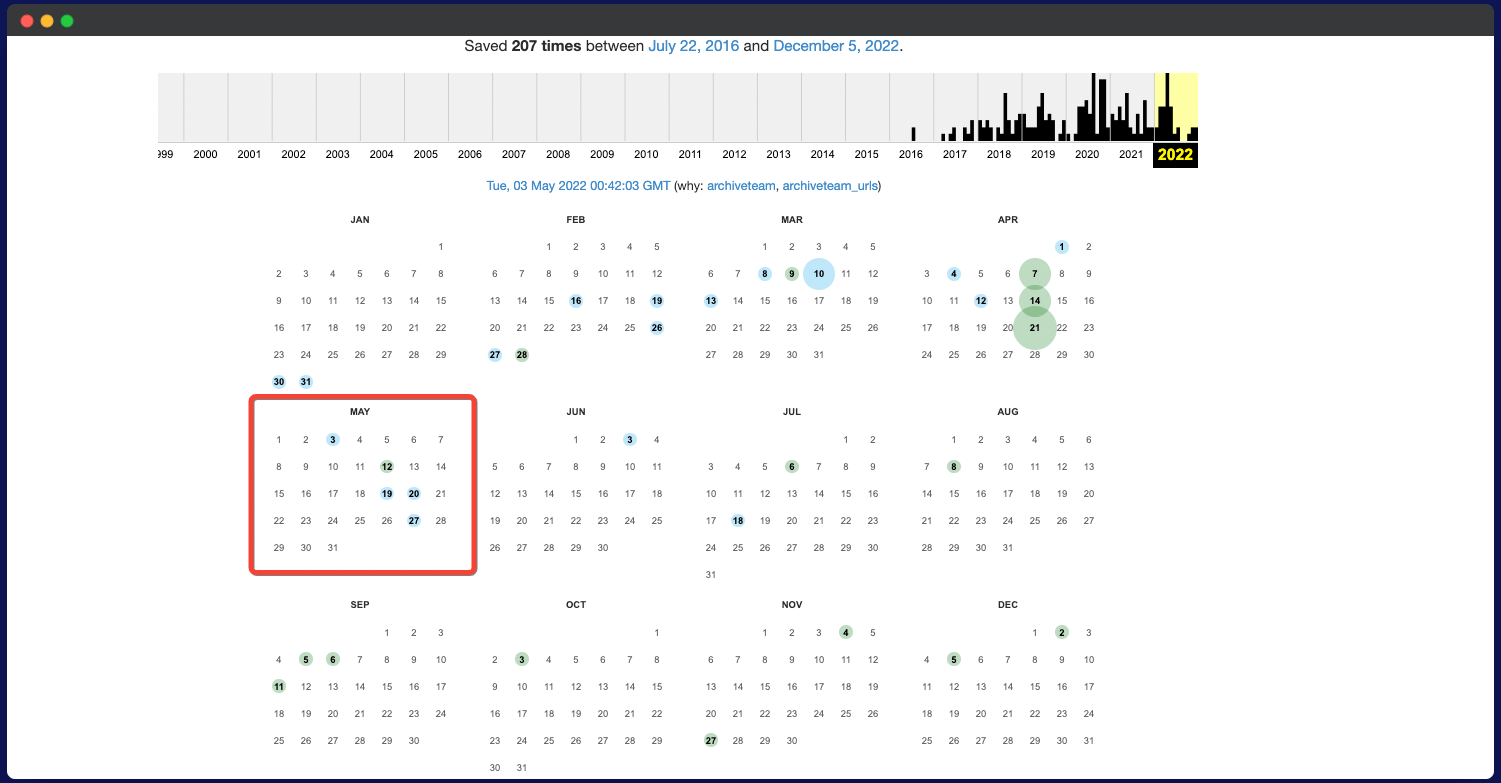
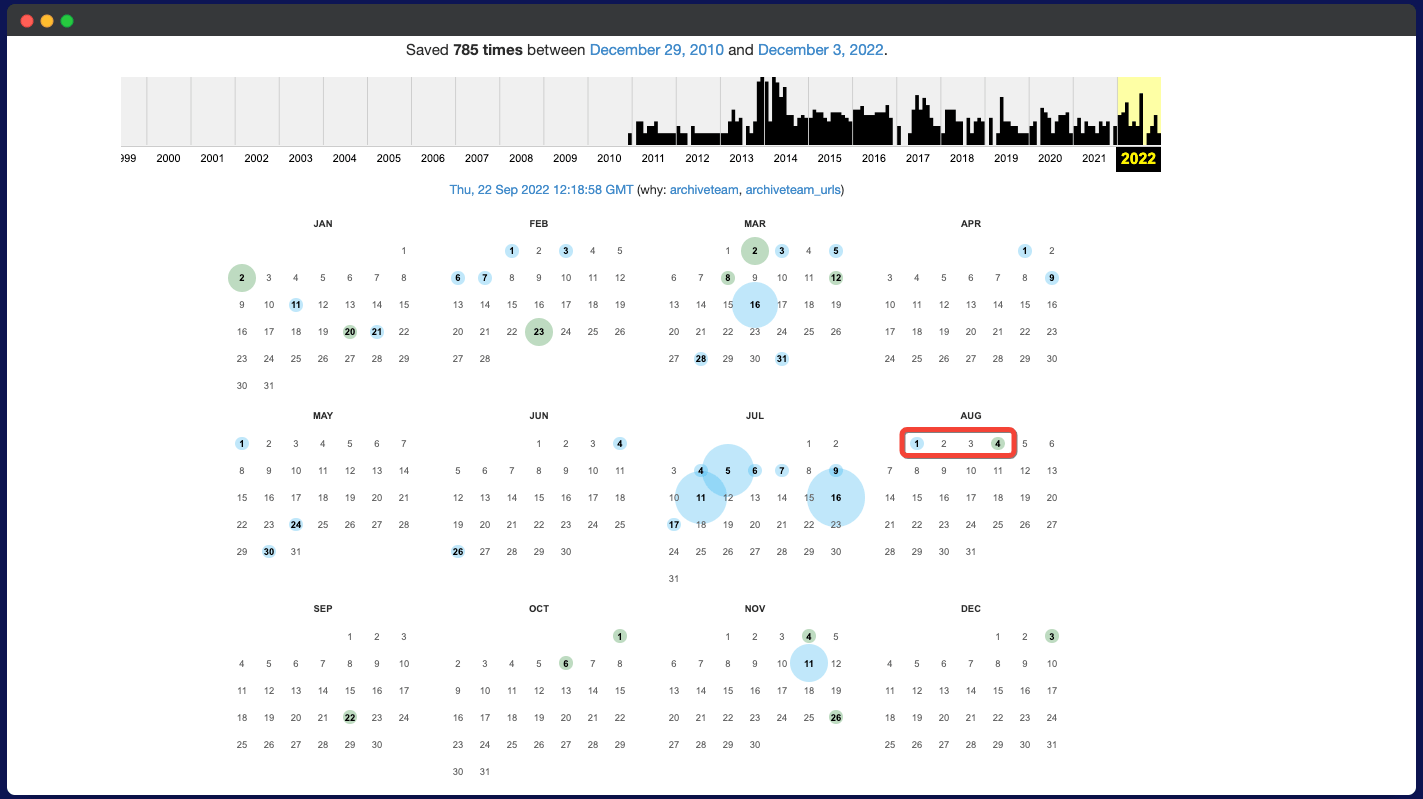
The Internet Archive helped us pin down the migration dates:
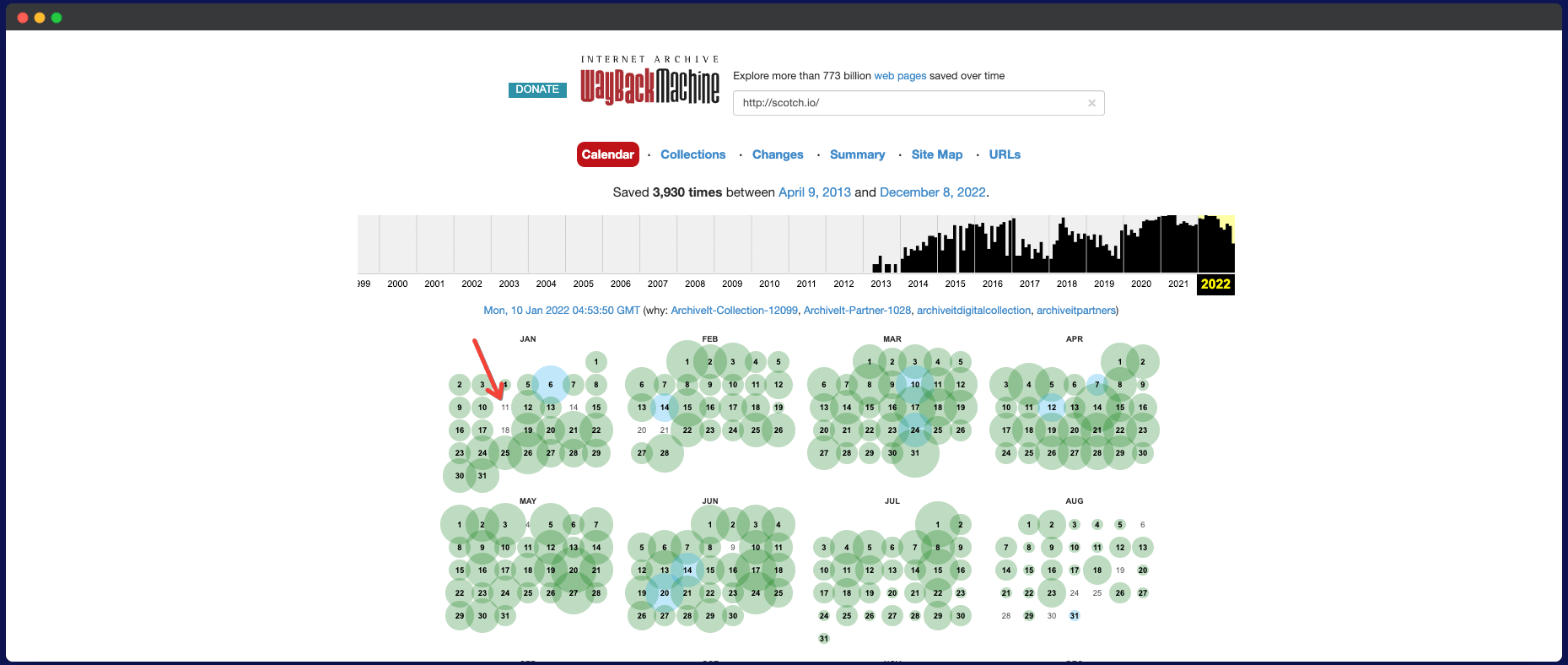
Pre-Migration Traffic
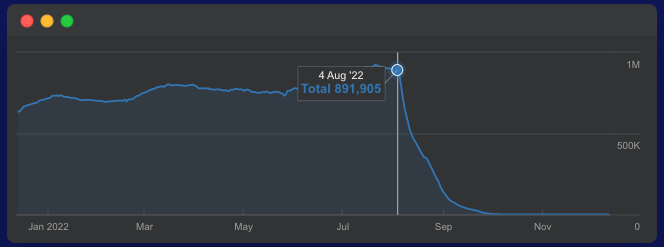
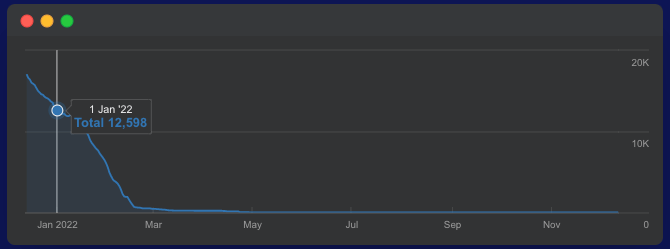
Examining each site's pre-migration organic traffic and Digital Ocean's post-migration traffic is illuminating:
| Domain | Migration Date | Pre-Migration Traffic |
|---|---|---|
| JournalDev | August 2022 | 891,000/month |
| Alligator.io | May 2022 | 65,000/month |
| Scotch.io | January 2022 | 12,500/month |
| Combined Total | - | ~968,000/month |
Together, Scotch, Alligator, and JournalDev had around 968,000 organic traffic per month that now "belonged" to Digital Ocean.
What DO Did After Acquiring
Buying an established domain is one thing, but leveraging the acquisition is an entirely different process. After purchasing these established domains, Digital Ocean needed to:
- Add internal links to strategic pages. Important pages needed more internal links, which search engines would see as a positive ranking signal.
- Merge similar articles to create stronger content.
- Redirect the old URLs to new ones using 301 redirects to keep the link status of the older articles.
- Optimize the URL structure. DO's SEO team allocated time to optimize the URLs from Alligator and Scotch.
- Expand their writer pool. Scotch and Alligator had hundreds of different authors who could now write for Digital Ocean.
CSS-Tricks Acquisition: The Biggest Move
On 15 Mar 2022, Digital Ocean acquired CSS-Tricks.
Over the years, site founder Chris Coyier turned CSS-Tricks into one of the leading sources for front-end developers and designers around the web. CSS-Tricks' organic traffic crosses 1 million visitors per month.
Since a large portion of Digital Ocean's target audience are developers, this move gave them insane exposure.
DO is not planning to move CSS-Tricks into their community section. Their acquisition announcement said, "CSS-Tricks will remain as a standalone site, and all content will continue to be free and open to anyone."
The fact that CSS-Tricks is on a separate domain is not keeping Digital Ocean from leveraging this insane domain, however. While it may look like two separate domains, with one serving ads to the other, the relationship is more complex. In certain activities, they act like one domain, with Digital Ocean seeing the benefits in most cases.
Benefits of the CSS-Tricks Acquisition
Brand Awareness: Digital Ocean is now mentioned in thousands of high-quality articles. CSS-Tricks is known for having great content, and by being there at the point where their target audience is learning a new trick or solving a problem, Digital Ocean's authority increases.
Leads: Digital Ocean places its banner into every article in CSS-Tricks.
Backlinks: Each of the 91,000 pages on CSS-Tricks is linked to Digital Ocean, as you can see on the bottom menu. In addition, DO's SEO team can improve and strengthen certain pages on their site by adding additional links from the CSS-Tricks domain.
Traffic: With almost 16,000 keywords ranked on Google's first page, including the top 10 places, CSS-Tricks is getting massive traffic. Even if only a tiny percentage clicks on one of the many links in each article, that's a lot of traffic.
Attracting great writers: CSS-Tricks has always paid technical writers well. Great editing work, high content standards, and a sense of community made the content published by CSS-Tricks stand out in its niche.
Getting technical people to write for your brand is challenging. Good incentives, such as paying a high amount per article and getting great exposure, can make more people want to write for your brand.
Before the acquisition, writers on CSS-Tricks would be paid around $250. After the acquisition, the price rose to $300 for standard articles and $400 for complex ones.
Statistics: The Impact in Numbers
Digital Ocean has seen a decline in organic branded traffic, from 22% to 8.6%. You might think, "People search less for Digital Ocean; that's bad!" In most cases, I'd agree, but not in this one.
Digital Ocean ranks for more search terms that don't contain the phrase "digital ocean," becoming less vulnerable to competition. Their traffic is much more diverse, which can attract new people who weren't aware of Digital Ocean and could potentially become customers.
Excluding Digital Ocean's community section, the monthly traffic rose from 355,000 in December 2021 to 423,000 in December 2022. A 19% growth.
Since January 2021, the number of organic pages has gone down by 53%, while the average organic traffic has risen by 88%. This can be achieved by merging similar content and deleting unnecessary pages to optimize the crawl budget.
What Could Digital Ocean Do Better?
Digital Ocean scaled fast thanks to its high content standards and intelligent acquisitions. With thousands of new pages migrating to a domain, technical SEO issues are common.
If you ever plan to shift a domain, these points will be valuable for you as well:
When Digital Ocean acquired a domain, they needed to redirect articles to their website. In many cases, the redirect wasn't set up properly. For example, alligator.io/js/intro-progressive-web-apps/ redirects to a 404 error. A small tweak to the URL fixes the problem.
Many articles that didn't pass the migration (possibly due to low content quality) redirect to the main community page instead of a related topic. This loses the link benefits and provides a poor user experience.
The fix: Redirect these articles to the ones with the closest topic. This would keep the link benefits of hundreds of different articles and boost many pages on the Digital Ocean website.
Conclusion
Digital Ocean's growth over the last few years was not a matter of luck. It resulted from hard work, thinking out of the box, finding the right opportunity, and learning while moving to leverage the acquisitions.
In Digital Ocean's case, they did it bravely, and the results were impressive.
If you enjoyed this in-depth analysis, please share it with your network. I believe that bringing value to other people is the best marketing there is, and I hope that by sharing this analysis, you will check from time to time the new articles we release each month.
Related Articles

Yuval Halevi
Helping SaaS companies and developer tools get cited in AI answers since before it was called "GEO." 10+ years in B2B SEO, 50+ cybersecurity and SaaS tools clients.