

People now ask AI where to put their money, and NerdWallet keeps appearing in the citations. I wanted to know why. So I took apart one of its brokerage guides, marked every trust signal on the page, and traced each one to the outside evidence behind it. The result: NerdWallet does not rely on good writing alone. It makes its authors, review process, commercial incentives, and credentials easy to verify. Most of that can be copied by a newer site.
TL;DR
- NerdWallet makes its authorship, review process, and commercial incentives visible and independently verifiable.
- The same trust signals appear on the page and in its structured data.
- A newer site can copy the process, but it cannot instantly copy an author's track record or genuine first-hand experience.
The Same Name Keeps Appearing
Run a handful of money questions through ChatGPT, Perplexity and Google's AI Overviews, and read the citations. Not every answer, and not every time. But in personal finance, one name keeps coming back: NerdWallet.
It is never the only source. Investopedia and Bankrate appear too, along with the brokers themselves. But NerdWallet keeps making the shortlist across all three systems. I wanted to know which parts a newer site could replicate without NerdWallet's history.
I run a GEO agency, so questions like this are my whole job, and the standard explanation has always bothered me. "They have authority." Fine. Years of domain history and millions of backlinks. True, and useless, because none of my clients can buy that. If authority is the entire answer, the only advice left is "be old."
I did not believe it was the entire answer. So I pulled up one page, its guide to opening a brokerage account, and took it apart twice. Once in a browser, the way a reader sees it. Once as raw HTML, the way a crawler does.
I was hunting for reusable tricks: heading patterns, formatting habits, or something you could copy in an afternoon and ship on Friday.
The first find was annoying. There are no tricks. The writing is simply good. It answers the question in the first sentence, never talks down, and stays readable to the end. That is rarer than ever now that anyone can drown a topic in generated text. But good writing is not a trick I can copy, only something to be inspired by.
The byline. Most pages carry one name. This one carries four. Written by. Co-written by. Edited by. And a fourth role I almost scrolled past: reviewed by. A certified financial planner who runs his own advisory firm. He did not write a word of the article. His role was to review the article and publicly attach his name and credentials to it.
The top of a page is its most valuable space, and NerdWallet uses much of it to show who created and reviewed the content. Nobody does that by accident.
So I kept pulling the thread. An advertising disclosure above the headline. A badge linking out to a published standards document. A licence number in a public licensing database. Each element makes a claim that readers can verify outside the page.
Why This Page Is Held to a Higher Bar
Personal finance falls under what Google calls YMYL, or Your Money or Your Life. This category covers pages that can affect someone's health, safety, or financial stability. A guide to opening a brokerage account clearly belongs in it because readers may act on the information and move money.
Google holds YMYL pages to its strictest standard. On an ordinary topic a thin page is just low quality. On a YMYL topic it is treated as capable of doing harm.
Did you know?
Google uses contracted Search Quality Raters to evaluate sample search results against its public Search Quality Rater Guidelines. Their individual ratings do not directly change rankings. Instead, Google uses the feedback to assess whether changes to its search systems improve result quality.
The guidelines define E-E-A-T and YMYL. For financial pages, raters are instructed to examine who created the content, what expertise they have, and what reputation the site has. The guidelines are not a ranking factor, but they are the clearest public description of the qualities Google wants its systems to recognize.
You can write a YMYL article with none of that in place, and plenty of sites do. NerdWallet appears to have decided that investing in this review process is less costly than being perceived as unreliable.
There is a second audience too. A reader landing here sees a writer with twenty years on the topic, a co-writer, an editor, and a certified financial planner who checked the work. That creates a very different impression from a page with no named contributors.
On the page, that process shows up as transparency about three things.
I marked the ten elements that require real time, expertise, or money, and skipped the features a CMS can add automatically. The numbered boxes mark each element discussed below. Dashed boxes show supporting detail. Select a number to jump to its explanation.
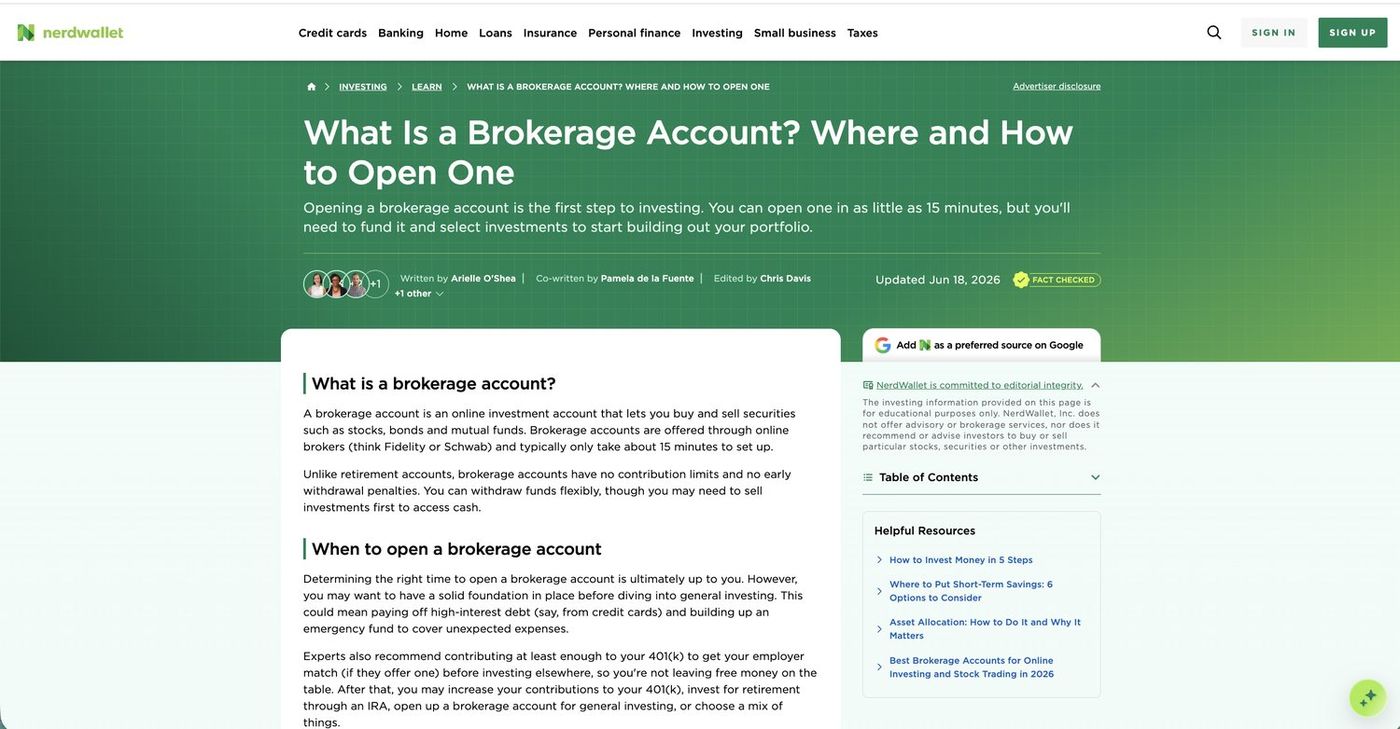
Who Wrote It, and Why That Matters Here
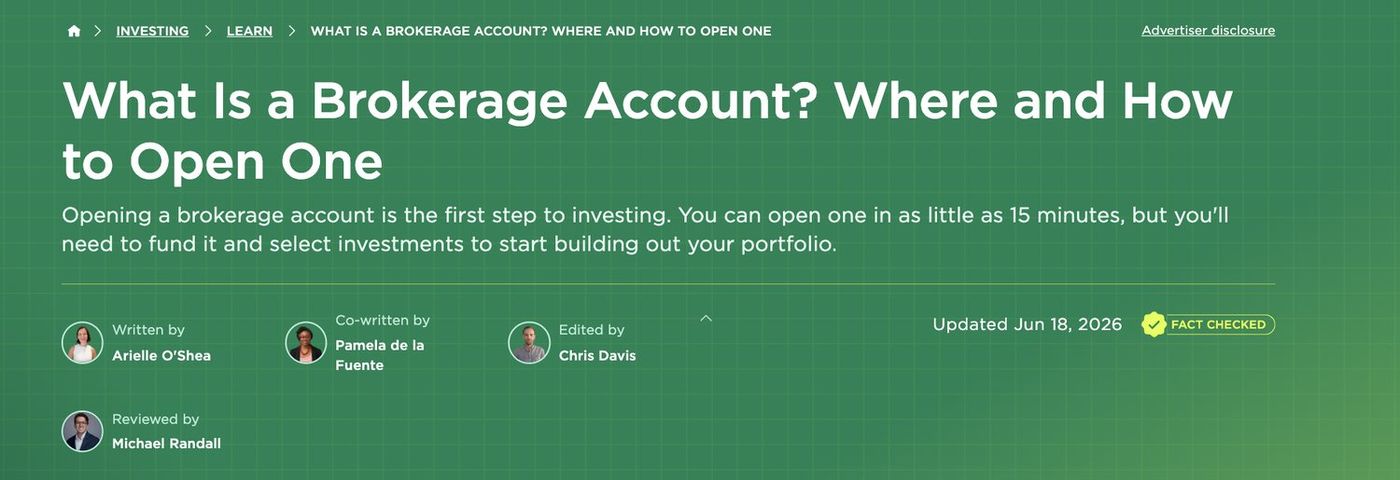
Four roles, each with a label. Written by. Co-written by. Edited by. Reviewed by. Most sites give you one name, or a company logo, which tells a reader nothing about who did what.
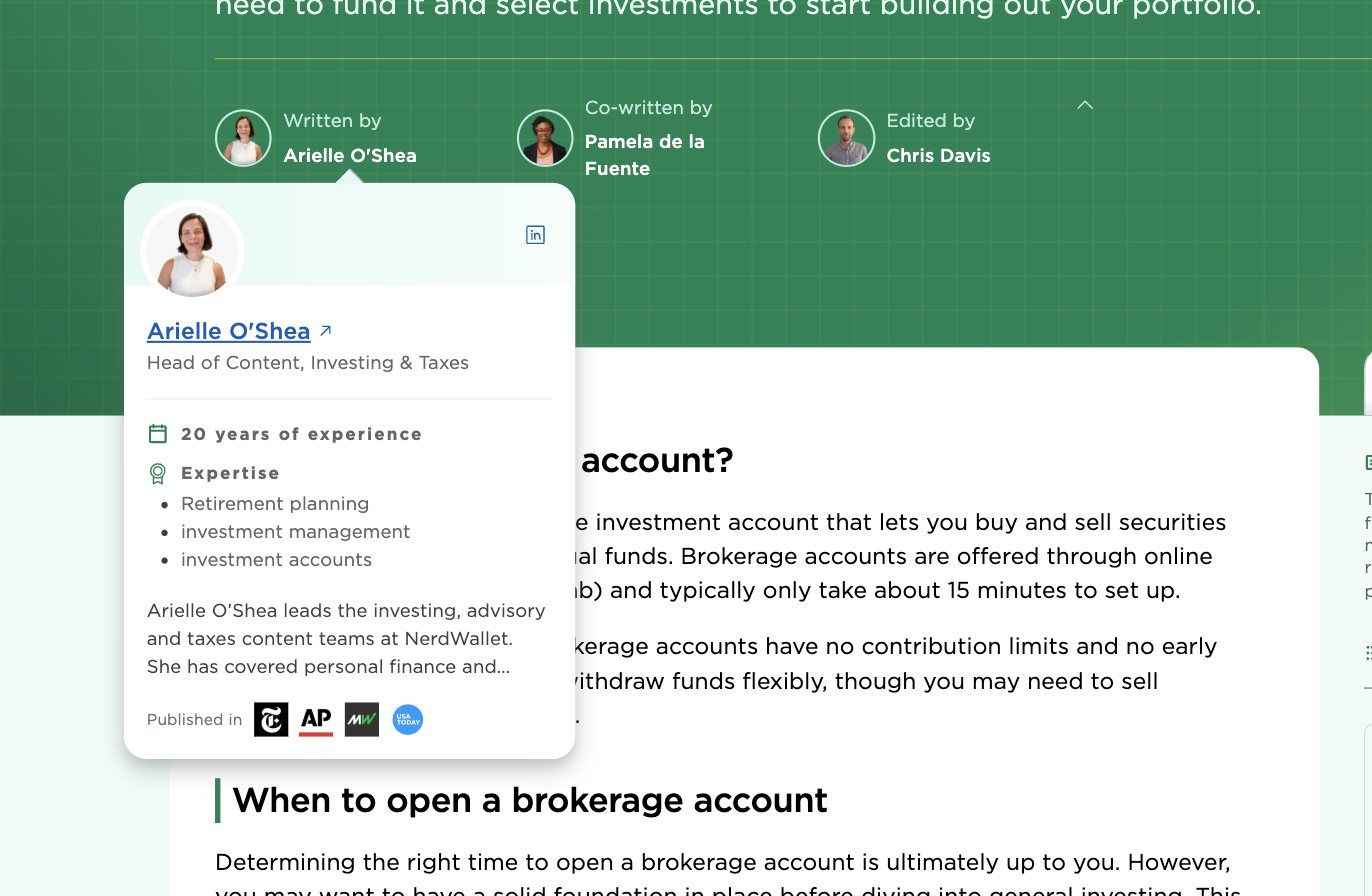
The publication row matters most. The New York Times, AP, MarketWatch, USA Today. The card makes claims about her, and the logos are where those claims can be checked: four newsrooms with editors of their own that ran her work.
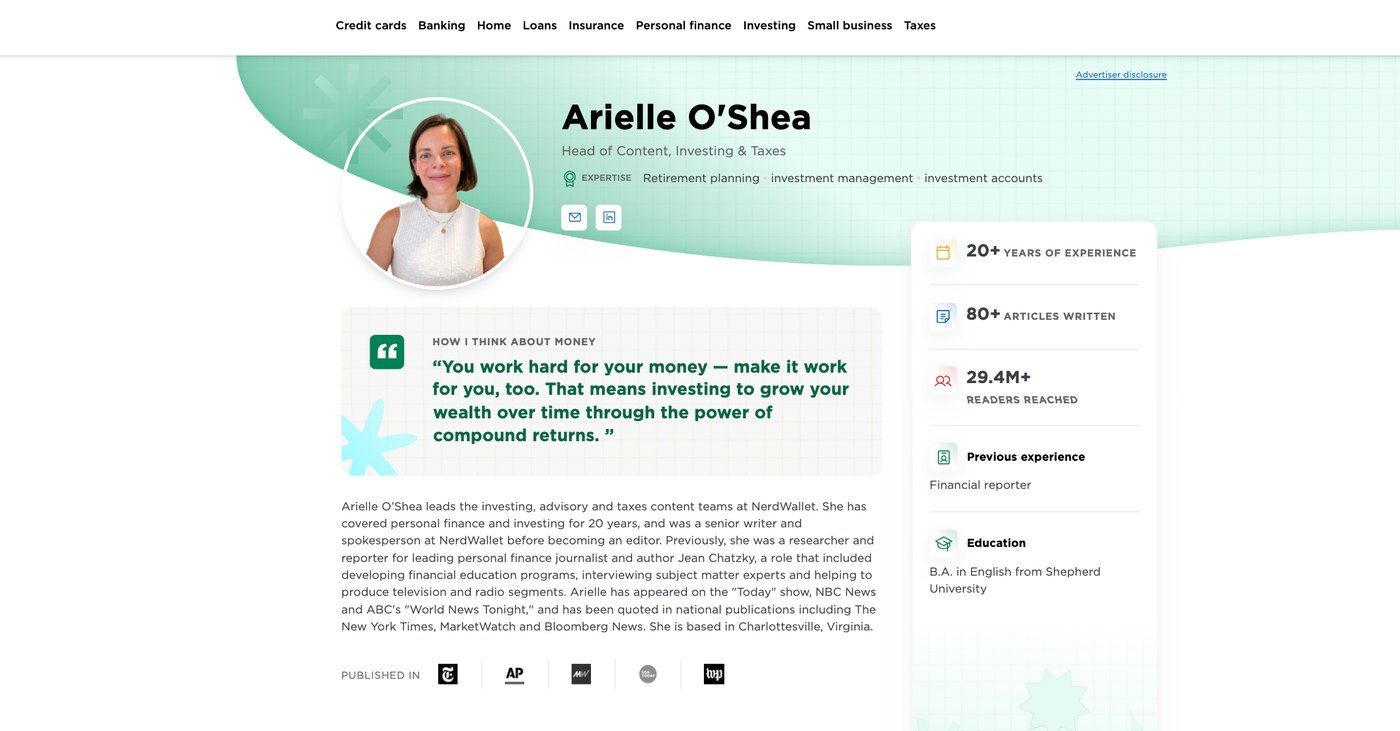
Her author page adds more evidence by listing 20 years of experience, more than 80 articles, 29.4 million readers reached, her education, previous roles, and 44 pages of published posts.
Key insight
Two writers can produce equally good copy. Only one of them can point at twenty years of work published under her own name in outlets she does not own.
That is the gap AI cannot close. It can match the prose. It cannot match the track record, and on a YMYL page that track record is a major part of the trust assessment.
| Candidate | Author evidence |
|---|---|
| NerdWallet guide | Named authors with externally verifiable work |
| Established finance blog | Named author but limited outside evidence |
| Fresh AI-written post | No named author or track record |
What to do: Name the writer, editor, and technical reviewer. Give each person a profile showing what they know and where else they have published. If the author has no external track record, schema cannot create one.
How It Gets Checked
Michael Randall reviewed this page. He holds CFA, CFP, and EA credentials and owns a fee-only advisory firm in San Diego. He did not write the article.
What matters is that NerdWallet names him and states credentials issued by bodies it has no control over. The CFP Board is searchable. So is the CFA Institute's member directory. Readers can independently verify both credentials.
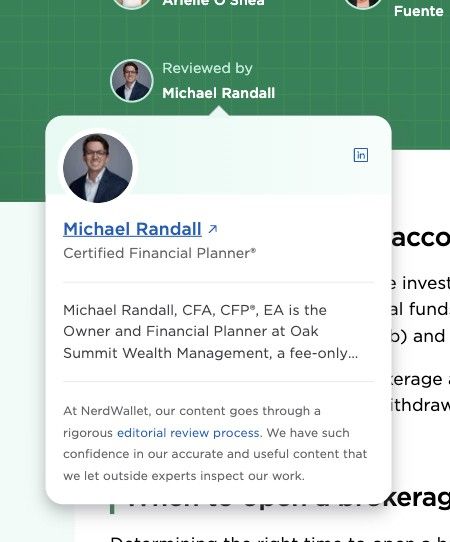
The card explains the arrangement by saying NerdWallet is confident enough in its content to let outside experts inspect it.
Randall also has a dedicated reviewer page. Author profiles live under /author/, while reviewer profiles live under /reviewer/, and the two use different templates.
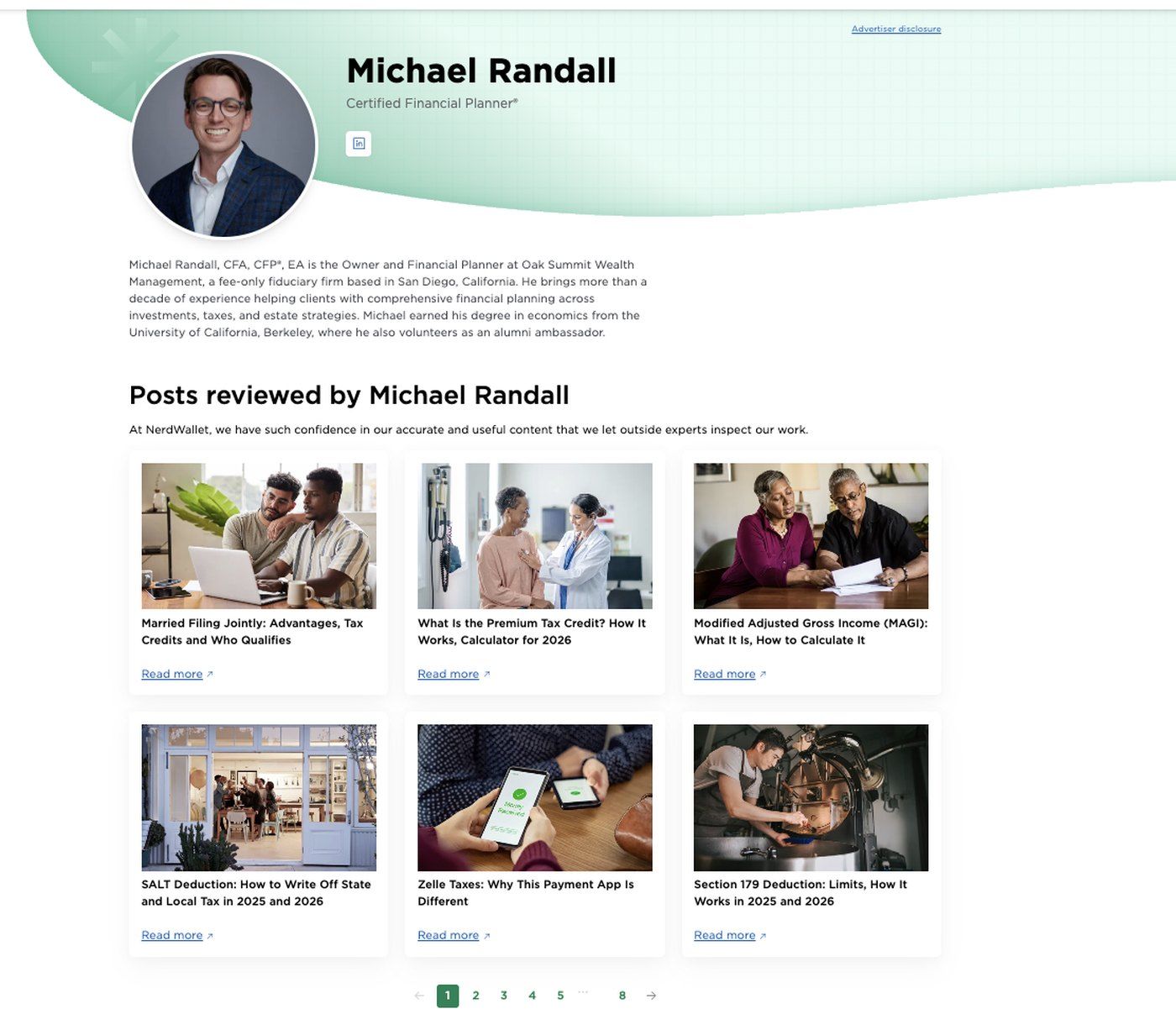
The reviewer page publicly lists eight pages of articles Randall has checked. That turns a general claim about review into a visible review history.
Next to the date sits a Fact Checked badge. It does real work on its own: a reader can recognize the badge immediately, and it signals that a review process exists. What makes it more than a sticker is what sits behind it.
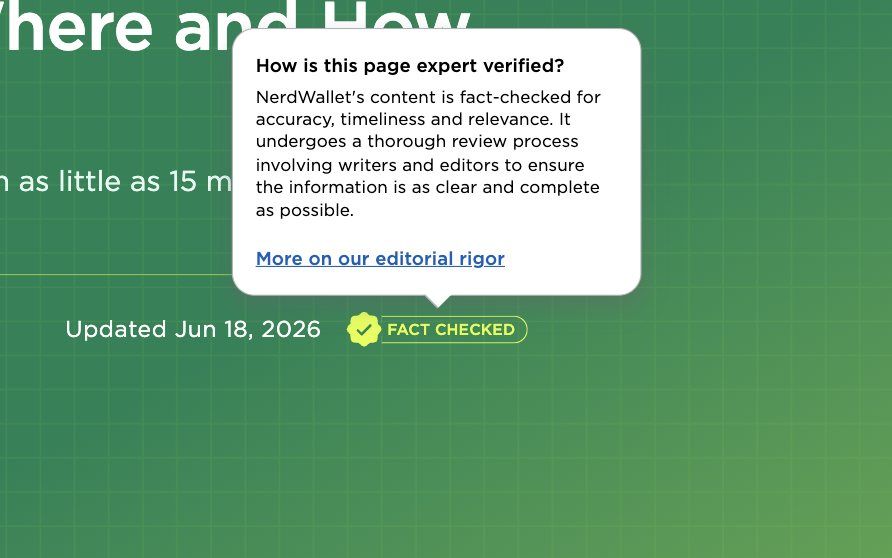
Open it and you get a definition of what fact-checking means here, plus a link to the public standards page.
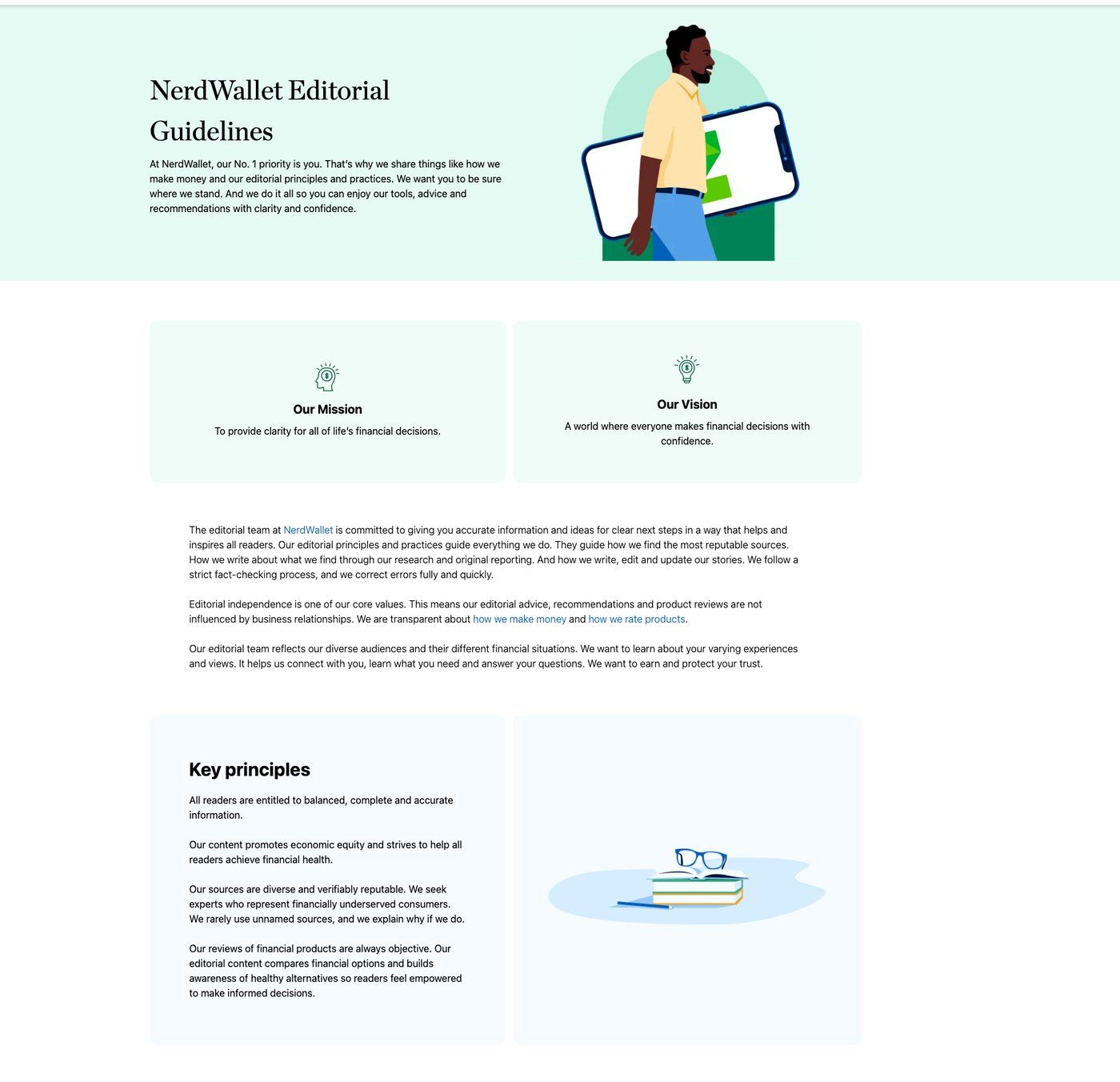
That page is not boilerplate. It says editors are never paid based on product reviews, describes how corrections are handled, and prints an email address for reporting mistakes. The badge claims the article was checked. The supporting evidence is the documented process, the named reviewers, and a public way to report errors.
What to do: Write the standards page once and link it from every article. Name whoever checks your technical claims. The badge summarizes the claim, but the standards page is what supports it.
How They Make Money
The advertiser disclosure sits in the top right corner, above the headline. Not the footer.
Open it and NerdWallet explains that it is a comparison service rather than an advisor. It links to the companies that pay it and states that those companies cannot purchase favourable reviews.

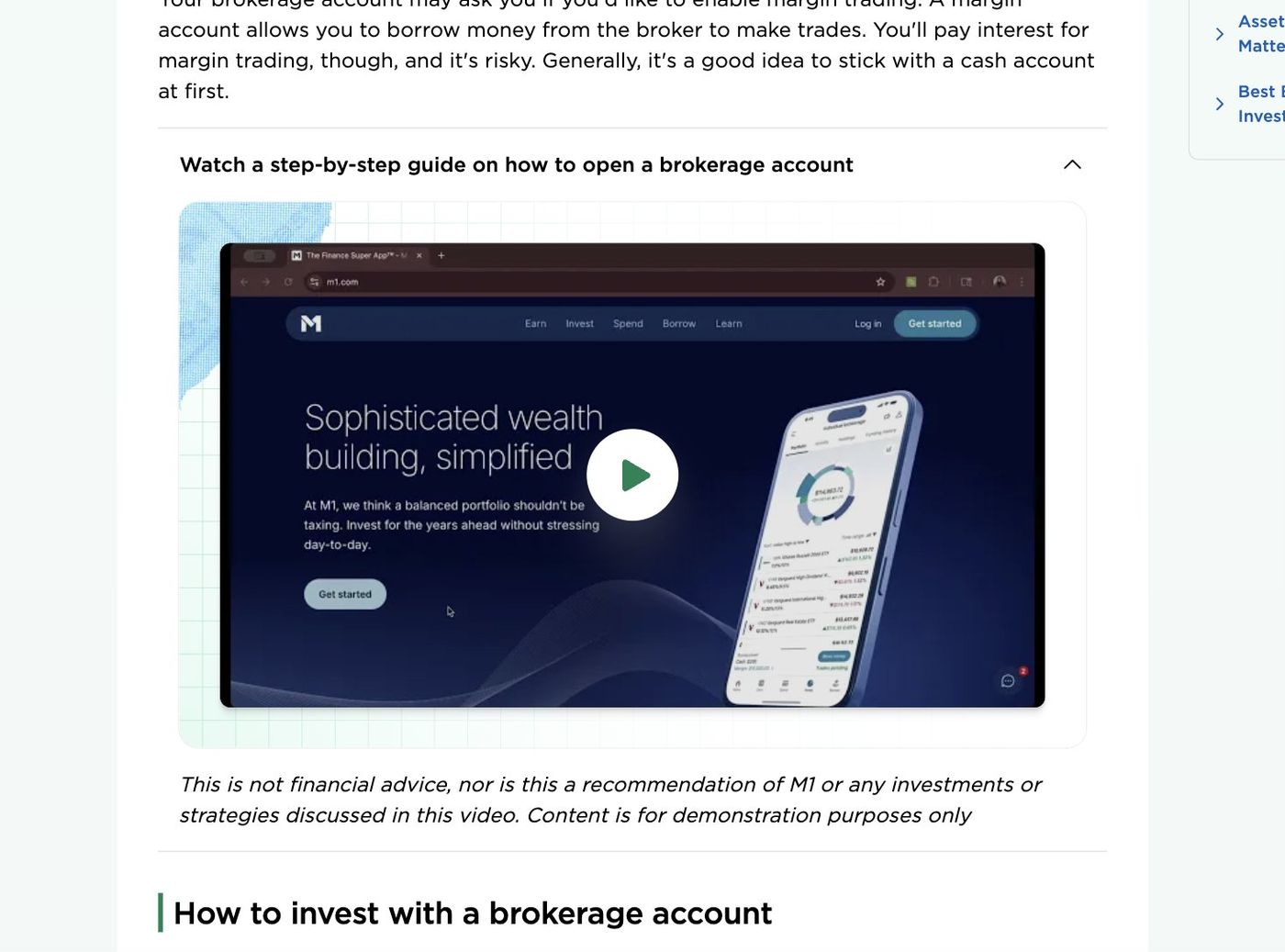
A tip box warns that margin trading costs interest and carries risk, and recommends using a cash account instead. Margin is one of the more profitable things a broker sells, and brokers are the advertisers on this page.
Key insight
This is one of the cheapest ways to build trust, yet it is often the one clients resist most.
In my experience, readers recognize your commercial bias either way. The difference is whether you disclose it yourself or force them to discover it.
What to do: Publish how you make money in plain words and link it from every commercial page. Then add one honest limitation to each of those pages. Our agentless setup deploys faster but sees less at runtime. If you need syscall-level data, choose an agent-based product. You lose a few bad-fit deals and stop sounding like a brochure.
What AI Can Extract
Everything above is aimed at a person deciding whether to believe the page. The next two elements help machines extract and understand the content.
The section titled What is a brokerage account? starts by defining a brokerage account. One sentence, no warm-up.
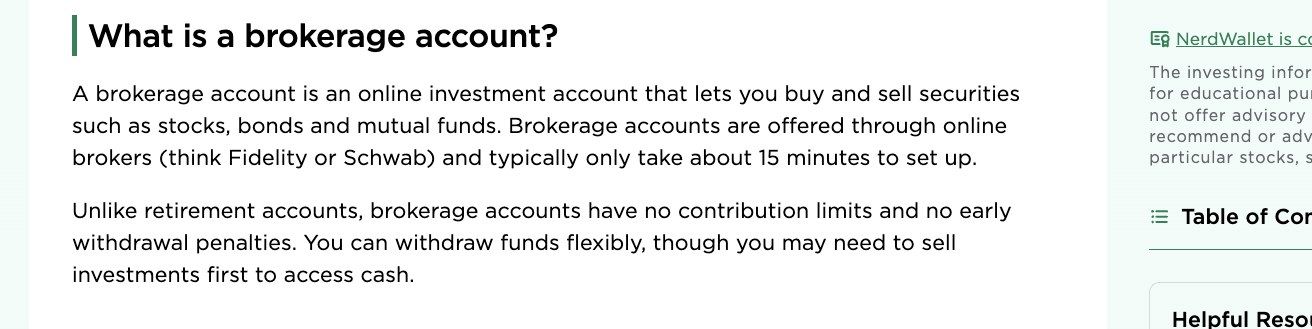
Cut that sentence out of the page and it still makes sense on its own. That matters because quoted and summarized passages may appear without their surrounding paragraph.
What to do: Read the first sentence under each heading in isolation. If it depends on surrounding context, rewrite it so it can stand on its own.
Inside that same definition: Fidelity, Charles Schwab, E*TRADE and Vanguard. Four real companies, named in the sentence that explains the concept.
Models also use named entities to understand context. An SSPM page that never mentions Okta or Microsoft 365 may appear less connected to the topic, no matter how long it is.
What to do: Name your competitors. Name the tools people run alongside yours. Name the standards and the CVE numbers.
Evidence You Can Verify Elsewhere
A quote from an independent money coach about holding investments for over a year to get the lower tax rate. The page gives her name, business, and the interview method: email. That sourcing detail makes the quote more transparent.
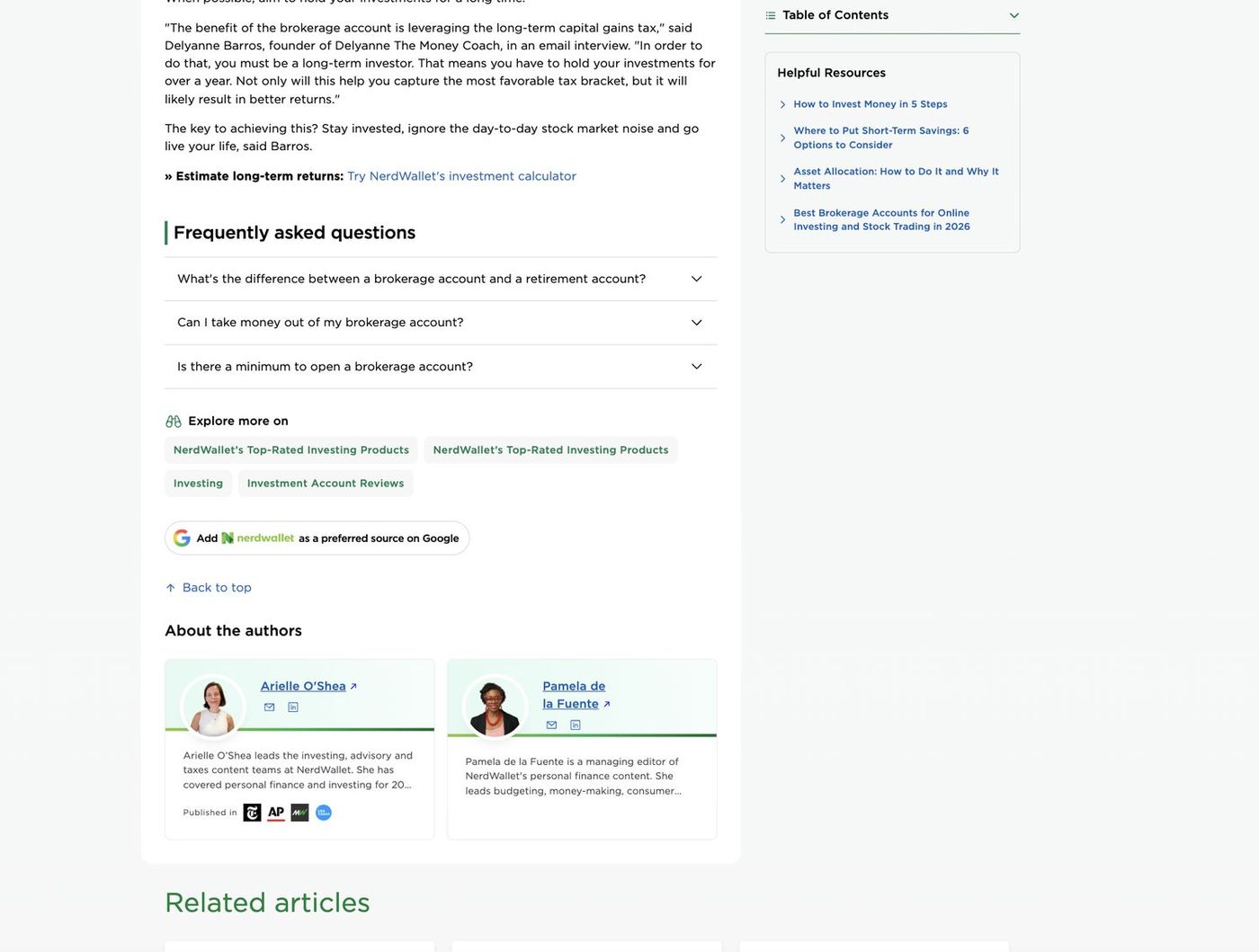
Two rows down, inside the FAQ, they cite the SEC changing settlement from T+2 to T+1, with the date of the ruling and the date it took effect. A named regulator and two dates you can verify in a minute.
What to do: Interview practitioners for major articles and explain how the interviews were conducted. Cite the CVE number, the clause, the enforcement date. Exact, dated facts are easy to verify and easier for AI systems to cite precisely.
On their news articles, the same habit gets its own component. At the bottom of a recent piece on whether you can buy Anthropic stock sits a collapsible block titled Article sources.
It opens with a sentence on sourcing standards that links back to the editorial guidelines, so the component and the policy point at each other. It then presents a numbered list of 16 sources for one news post. Each entry includes the publisher, linked title, and access date. The list combines primary sources, such as Anthropic's own announcements and a draft S-1 filing, with reporting from Reuters, Bloomberg, The Wall Street Journal, the Financial Times, and CNBC.
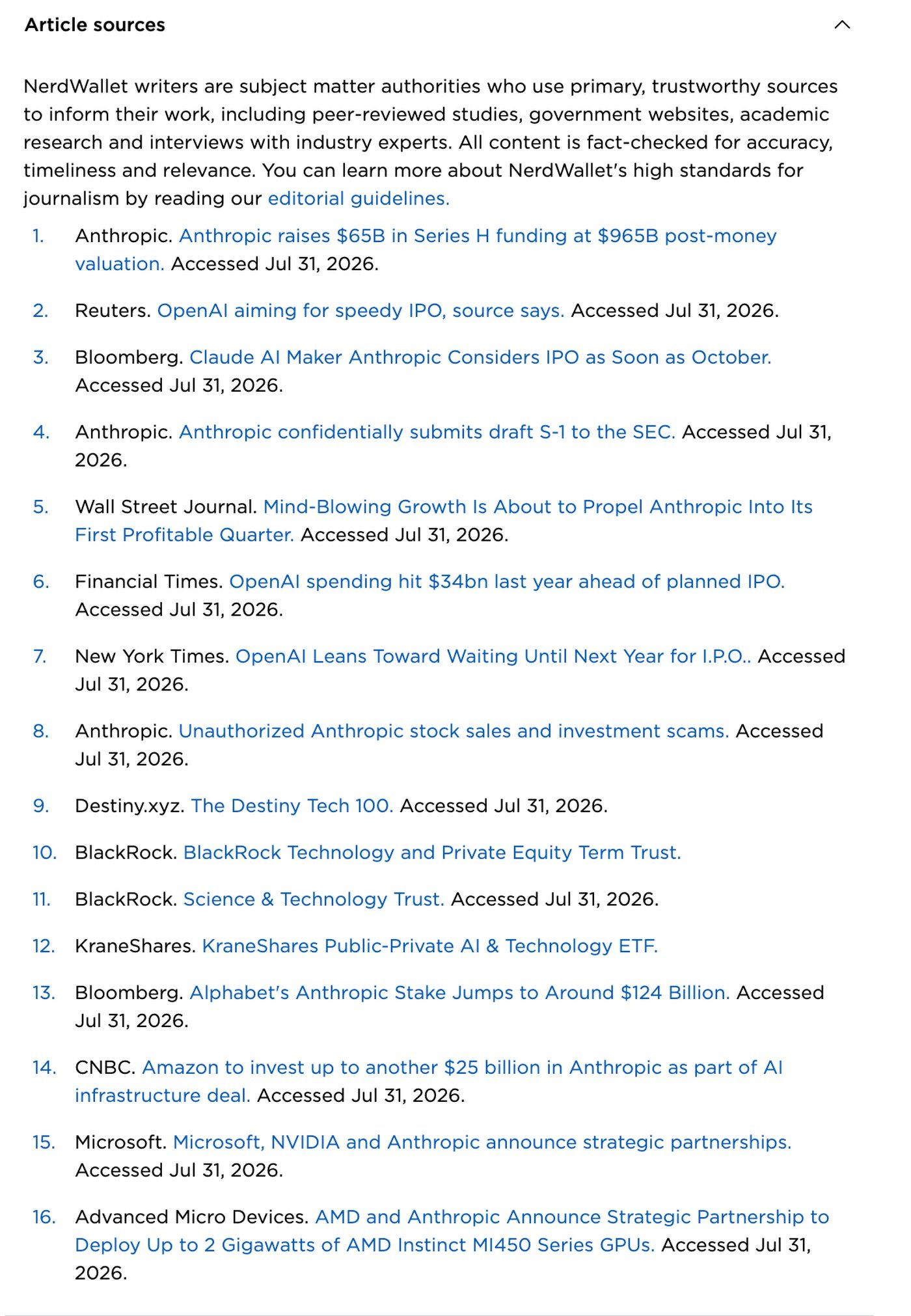
The access date gives the source list an audit trail by recording when each source was checked.
What to do: Copy the format wholesale. Publisher, linked title, access date, numbered, at the bottom of every research-backed piece. And cite the primary source when one exists: the vendor announcement, the filing, the advisory, not the article that covered it.
In the footer, where nobody looks, an NMLS ID linked to a public licensing database. The site is tied to a real company in a register somebody else maintains.
What to do: Surface the identifiers you already have, such as a company registration number, certificate number, compliance report, or physical address. Do not bury all of them inside a trust center.
What Is Harder to Fake
One element left, and it is the one I would build first.
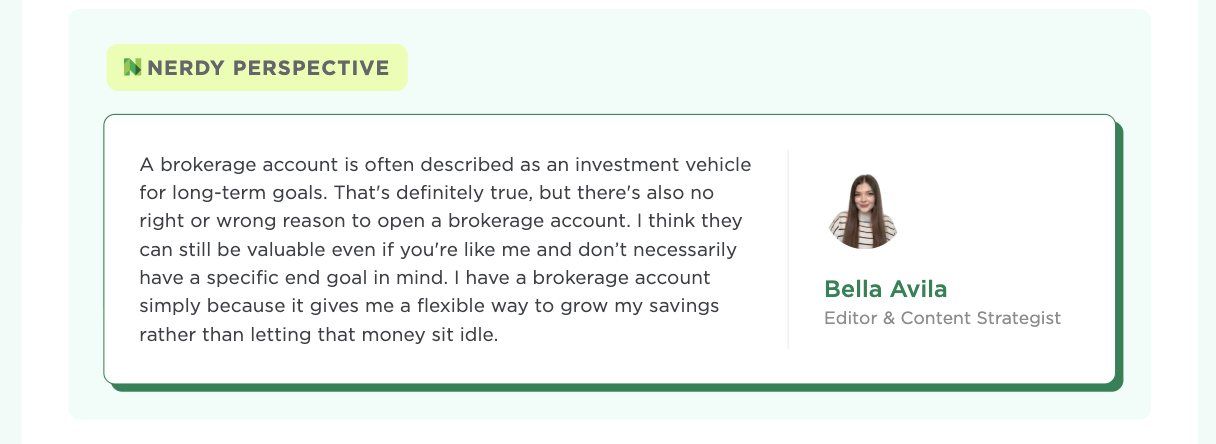
A box with a photo of Bella Avila, an editor, and her job title. She says she uses a brokerage account for flexibility rather than for a specific goal, adding a personal perspective that differs slightly from the article's goal-oriented advice. Because the note comes from an editor rather than either writer, the page includes experience from beyond the named authors.
Most of the other elements can be implemented through better publishing processes. This one requires genuine first-hand experience from someone willing to describe it under their own name.
What to do: One field note per article from a named person. What they observed in practice. What surprised them. What they would do differently. Because it is first-hand experience, it remains distinct even when AI summarizes several sources together.
How the Trust Signals Appear in JSON-LD
Everything above is built for a person to see. NerdWallet repeats many of these signals in the page's JSON-LD, so crawlers can access the same information in structured form. This is where most sites fall down: they add bylines and reviewer profiles, but then ship "author": "Jane Smith" as a plain string.
Here is the most relevant part, trimmed for length:
"about": [{"@type":"Thing","name":"Brokers"},
           {"@type":"Thing","name":"Investing"}],

"author": [{
  "@type": "Person",
  "name": "Arielle O'Shea",
  "jobTitle": "Head of Content, Investing & Taxes",
  "url": "https://www.nerdwallet.com/author/arielle-oshea",
  "knowsAbout": ["Retirement, financial planning, investment management"],
  "alumniOf": {"@type":"EducationalOrganization","name":"Shepherd University"}
}],

"editor": [{
  "@type": "Person",
  "name": "Chris Davis",
  "hasCredential": [{
    "@type": "EducationalOccupationalCredential",
    "name": "Series 65 (Uniform Investment Adviser Law Exam), NASAA"
  }]
}],

"mainEntityOfPage": {
  "@type": "WebPage",
  "reviewedBy": [{
    "@type": "Person",
    "name": "Michael Randall",
    "honorificSuffix": "CFP®, EA",
    "url": "https://www.nerdwallet.com/reviewer/michael-randall"
  }]
},

"publisher": { "@id": "https://www.nerdwallet.com/#organization" },
"dateModified": "2026-06-18",
"isAccessibleForFree": true
Highlighted: the four properties most sites drop, plus the reference that keeps the company declared once.
Five things worth copying
1. reviewedBy is actually there. The reviewer is a Person object with his credentials and a link to his own page, not just a name in the header.
2. hasCredential names the credential and its issuer. Chris Davis passed the Series 65, a licensing exam associated with NASAA. The schema connects him to both the exam and the organization behind it. So instead of trusting the word "qualified," a machine gets something specific to check.
3. knowsAbout lists what each person covers. Arielle's entry names retirement planning and investment management, the same ground her hover card shows. What the page tells a reader and what the code tells a machine agree.
4. People are tied to outside institutions. alumniOf for universities, affiliation for the National Association of Black Journalists and 826 Boston, an award from the National Association of Real Estate Editors. Each institution exists independently of NerdWallet.
5. editor is separate from author. The four roles in the byline survive into the code. Most schema flattens everyone into one author array and loses who did what.
What to do: Ship author as a Person object, not a string. Add reviewedBy, knowsAbout and sameAs. Compared with building an external publishing track record, this is a relatively small implementation task.
Conclusion
Good writing still matters, and this page has it. In YMYL it is just the entry ticket rather than the advantage. The question is not only, "Is this well written?" It is also, "Is this safe for someone to act on?"
What helps the page clear that bar is a set of independently verifiable claims: a writer with twenty years of published work, a reviewer credentialed by outside bodies, a licence number in a public licensing database, and a clear explanation of how the company makes money, including its conflicts and limitations.
None of that depends on prose quality alone. All of it is checkable, and none of it can be produced in one click.
Write well, then build the three evidence layers behind the content: who wrote it, how it was checked, and how the site makes money. That is the part to copy.
Screenshots captured 1 August 2026. NerdWallet may have changed the page since.